Why Scratch Resistance Matters: Understanding PE Protective Film Quality from a Manufacturer's Perspective
Introduction: The Scratch That Shouldn't Have Happened
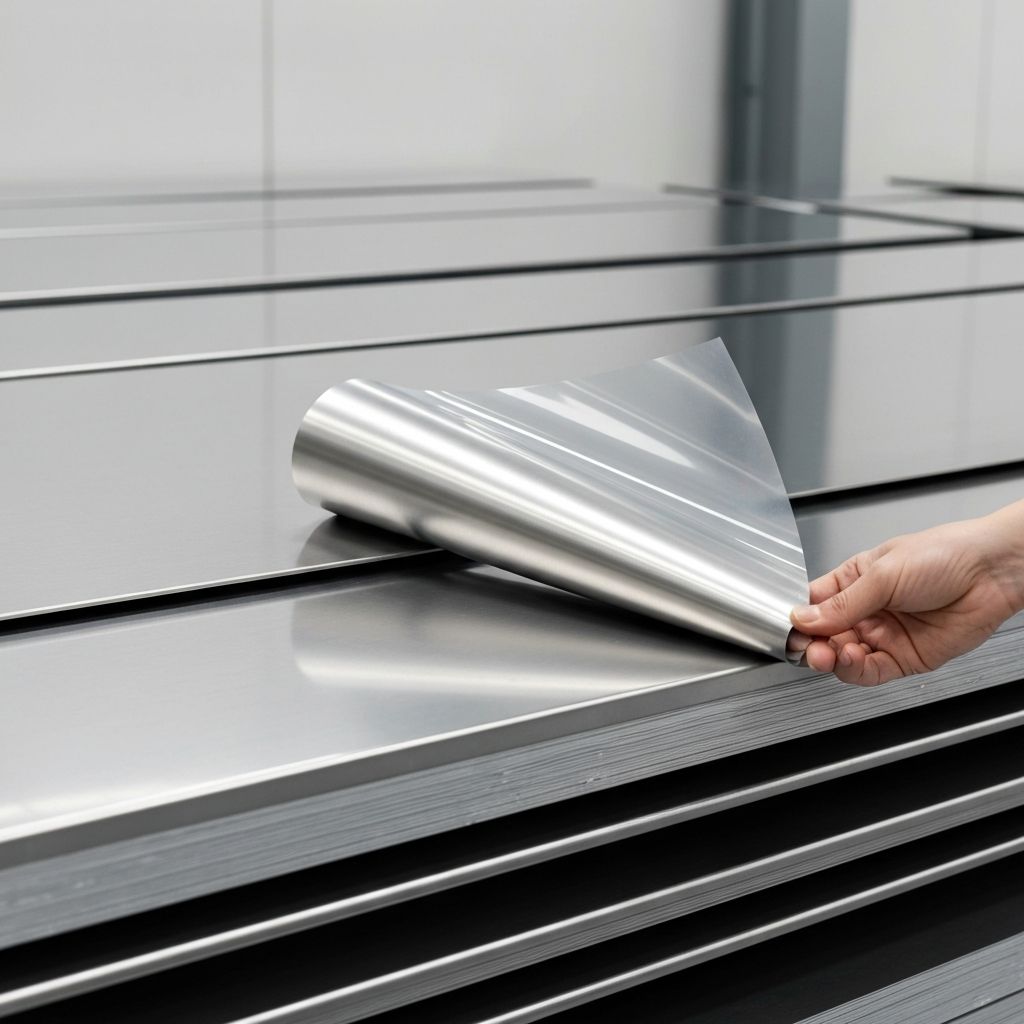
A PE protective film exists for one reason: to take the hit so the surface underneath doesn't have to. When a stainless steel panel arrives at the installation site with a scratch that goes straight through the film, the scratch resistance of that film wasn't just "low." It was absent. And the cost of that absence isn't the price of the film. It's the price of the panel, the delay, the reorder, and the conversation nobody wants to have with the customer.
Scratch resistance in protective films isn't a bonus feature. It is, alongside controlled adhesion and clean removability, one of the three legs the product stands on. If any one of those legs is weak, the film fails. Yet scratch resistance gets less discussion than adhesion in most procurement conversations. Probably because adhesion failures leave visible residue, while scratch failures look like "handling damage" and get blamed on logistics.
What Scratch Resistance Actually Means in PE Protective Film
It Is Not One Property
The term "scratch resistance" gets used in supplier conversations as if it's a single, measurable thing. It isn't. Scratch resistance in polymer films is a composite of several distinct mechanical responses, each governed by different material properties:
| Scratch Resistance Component | What It Means | Primary Material Driver |
|---|---|---|
| Surface hardness | Resistance to penetration by a sharp object under load | Polymer crystallinity, surface treatment |
| Mar resistance | Resistance to shallow cosmetic damage (haze, gloss change) | Surface smoothness, coating quality |
| Abrasion resistance | Resistance to repeated rubbing contact | Toughness, thickness, molecular weight |
| Gouge resistance | Resistance to deep, plastic deformation under concentrated load | Yield strength, film thickness |
When a procurement specification says "must be scratch-resistant," which of these four is being asked for? In most cases, the answer hasn't been thought through. That's a problem—because two films can pass a "scratch test" and behave completely differently in service.
The Pencil Hardness Reality
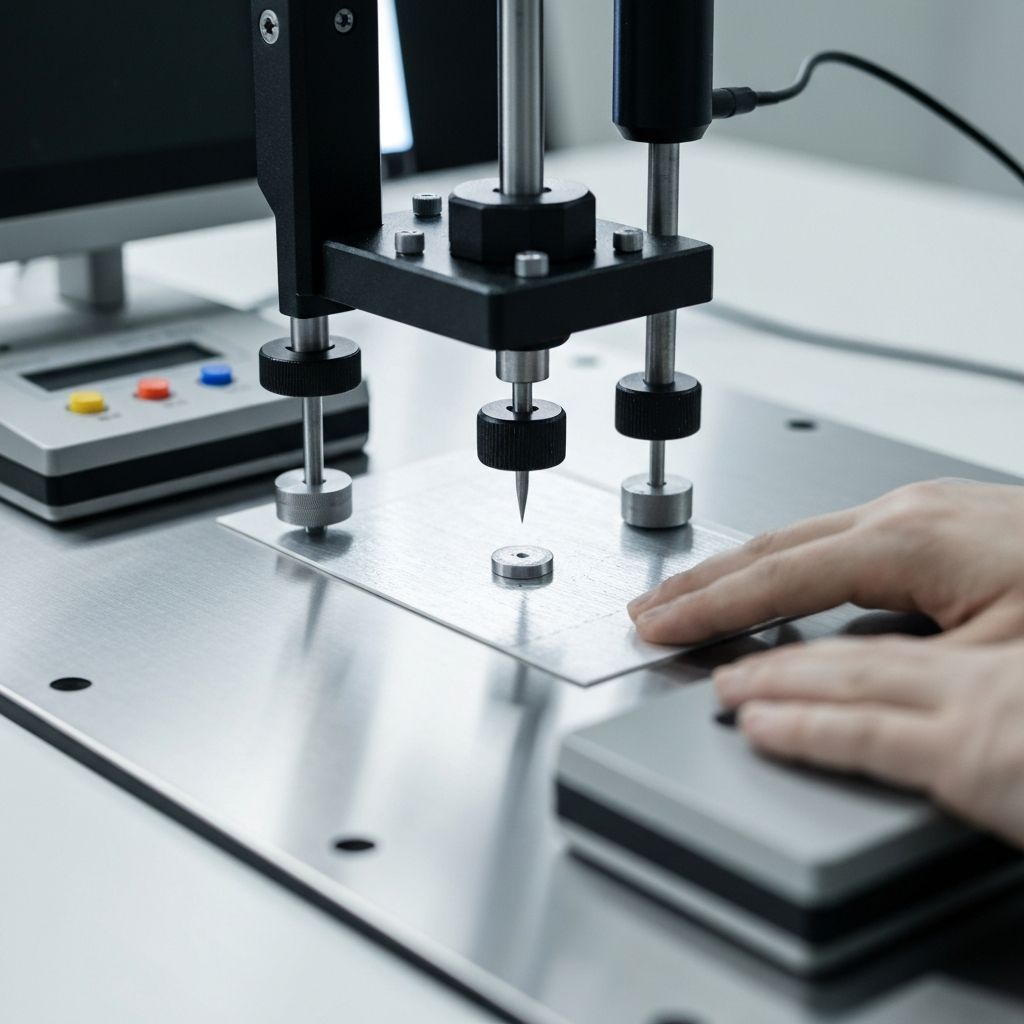
The most commonly referenced scratch test for polymeric films is ASTM D3363—the pencil hardness test. It uses pencils of increasing hardness grades, from 6B (softest) through HB to 9H (hardest), drawn across the film surface at a fixed angle and load. The "pencil hardness" of the film is the hardest grade that does not leave a permanent mark.
In practice, most monolayer PE protective films fall somewhere between 2B and HB. That's not high. It doesn't need to be. The protective film is sacrificial. What matters isn't how hard the film itself is, but whether the film absorbs and spreads the energy of a surface abrasion event before it reaches the substrate. A thicker, tougher film with a lower pencil hardness can outperform a thinner, harder film in real-world handling—because the thickness absorbs energy that the hardness alone never could.
How Manufacturers Engineer Scratch Resistance Into the Film
It Starts with Resin Selection
Scratch resistance in PE films begins before the extruder. The base resin matters. Low-density polyethylene (LDPE) offers flexibility and conformability, but its amorphous regions limit surface hardness. High-density polyethylene (HDPE) provides higher crystallinity, which translates to better hardness and scratch resistance—but lower clarity and reduced conformability.
Many high-performance protective films use a blend of LDPE and linear low-density polyethylene (LLDPE) to balance conformability with toughness. The LLDPE fraction introduces longer polymer chains with more tie molecules between crystalline lamellae, improving resistance to both scratch penetration and tear propagation.
For the most demanding applications, the PE film may be formulated with a polypropylene outer layer in a co-extruded structure. PP brings significantly higher surface hardness and scratch resistance than PE, at the cost of conformability and some clarity. This is why multi-layer co-extruded structures exist: the outer PP layer provides scratch resistance, while the PE core provides the flexibility and shock absorption.
Surface Hardening Technologies
Post-extrusion surface treatments can further improve scratch resistance:
- Corona treatment increases surface energy for better adhesion of subsequent coatings, but it does not directly improve scratch resistance. It is an enabler for coating adhesion, not a solution in itself.
- Hard coating (acrylic or UV-cured clear coatings applied to the film surface) can raise the effective pencil hardness of a PE film from HB to 3H or higher. This is common in optical-grade protective films for displays.
- Crosslinking—either through radiation or chemical crosslinking agents—increases the cohesive strength of the polymer network. A crosslinked film surface resists permanent deformation (gouging) better than a non-crosslinked equivalent.
The Thickness Factor
One of the most straightforward—and most overlooked—levers for scratch resistance is film thickness. A 50-micron film provides more material between the threat and the substrate than a 30-micron film. All else being equal, thicker films are more scratch-resistant simply because the energy of a scratch event has to penetrate further. This is not a material science insight, but it matters in procurement decisions where film thickness is being squeezed for cost reasons.
When a protective film manufacturer recommends 60μm for a given application, that number isn't arbitrary—it represents the minimum caliper that has been verified to prevent scratch-through under expected handling conditions for that substrate.
Scratch Resistance and Adhesion: The Performance Couple Nobody Talks About
The Trade-Off That Lives Inside Every Film
Here is a problem that lives at the center of protective film formulation: the relationship between scratch resistance and adhesion strength points in opposite directions.
A softer, more conformable adhesive layer achieves better wet-out on the substrate surface, which improves adhesion uniformity and reduces the peel force required for removal. But that same softness makes the film more susceptible to surface abrasion damage—the energy of a scratch event isn't dissipated quickly enough to prevent penetration.
A harder, more scratch-resistant film surface resists penetration and marring. But increased hardness usually means reduced conformability, which leads to uneven adhesion, which leads to adhesion failure in the field—the film lifts at the edges or delaminates under vibration.
Engineering a protective film that sits at the right point on this trade-off curve is what separates manufacturers who understand the application from those who sell based on price per square meter.
How to Measure Film Quality Beyond the Datasheet
The Test Spec Sheet Audit
The fastest way to assess whether a protective film manufacturer is serious about quality is to ask for the finished-product test specification. A serious supplier can produce, within hours, the following for any given batch:
- Scratch resistance data: Pencil hardness per ASTM D3363, or ISO 1518 scratch load to failure, or Taber abrasion cycles to wear-through per ASTM D4060—measured on the finished film, not on a lab coupon of the base resin.
- Adhesion strength data: Peel force per ASTM D3330 (180° peel, 300 mm/min, from a standard stainless steel or glass substrate), measured at 24 hours and after accelerated aging.
- Thickness profile: Total film thickness and individual layer thicknesses (for co-extruded films), with tolerance bands.
- Surface energy (dyne level): Verification that the film surface has been properly treated for coating adhesion.
If the supplier cannot produce test data measured on their actual finished product—not a generic resin datasheet from a polymer supplier—then the quality conversation is already over.
Quick Reference: What Scratch Test Results Tell You
| Test Standard | What It Measures | PE Film Typical Range | What the Number Tells You |
|---|---|---|---|
| ASTM D3363 (Pencil Hardness) | Surface resistance to scratch penetration | 2B to HB (monolayer PE); up to 3H (hard-coated PE) | Low numbers from a manufacturer who claims "scratch-resistant" suggests they haven't differentiated the surface from the base PE |
| ISO 1518 (Constant-Load Scratch) | Minimum stylus load (g) to cause penetration | 50g to 500g, film-dependent | A manufacturer that can provide this data has done the work |
| Taber Abrasion (ASTM D4060) | Cycles to wear-through under CS-10 wheels | 50 to 500+ cycles depending on thickness | Low cycle count with thick film often indicates poor surface quality |
| ASTM D3330 (180° Peel) | Adhesion/peel force (gf/25mm) | 3 to 500 gf/25mm, application-dependent | Inconsistent peel force across the film width signals extrusion instability |
Market Context: Why Scratch Resistance Is Being Taken More Seriously
The surface protection films market was valued at roughly USD 2.96 billion in 2024 and is projected to reach USD 5.62 billion by 2032, exhibiting a CAGR of approximately 7.1%. Within this broader market, the PE protective film market was valued at around USD 3.8 billion in 2024, growing to USD 5.5 billion by 2032 at a CAGR of 5.2%.
Several trends are pushing scratch resistance from an afterthought to a front-page requirement:
- Electronics manufacturing drives tolerance toward zero. The global electronics sector is projected to exceed USD 3.3 trillion by 2025, with Asia-Pacific responsible for over 60% of manufacturing output. A single visible scratch means a rejected unit.
- Automotive surface requirements are escalating. Electric vehicles with sensitive touchscreen interfaces and premium interior finishes are accelerating demand for higher-specification films.
- Scratch resistance as a quality proxy is gaining traction. Among experienced procurement teams, scratch resistance is increasingly used as a quick proxy for overall manufacturer quality.
Key Takeaways
- Scratch resistance is not one property. It's surface hardness, mar resistance, abrasion resistance, and gouge resistance acting together. When a specification says "must be scratch-resistant," define which type of scratch event the film needs to survive.
- The scratch resistance–adhesion trade-off is real. Harder surfaces resist scratches better but may conform less evenly, creating adhesion weak spots. A protective film manufacturer that understands this trade-off can explain why they formulated your film the way they did.
- Peel force and surface abrasion resistance are linked in practice. An operator fighting high peel force introduces scratches during removal. Controlled peel is a scratch prevention measure—not just a clean-removal feature.
- Test data from actual finished film—not a generic resin datasheet—is the minimum bar for quality assessment. A serious protective film manufacturer can provide finished-product scratch resistance, peel force, and thickness profile data by batch.
- Scratch resistance is the proxy that separates serious film manufacturers from the rest. It's a systems property—resin selection, extrusion parameters, surface treatment, and quality testing all converge on a single measurable outcome.