How to Select the Best Anti-Scratch PE Protective Film for Stainless Steel: A Manufacturer's Guide
Introduction: Why Stainless Steel Demands Special Attention
Stainless steel surfaces represent some of the most demanding applications for protective film. Mirror finishes, brushed textures, and precision-polished panels all require film solutions that protect without leaving any trace behind. The wrong film choice can cost more than the film itself—it can cost the entire panel.
A stainless steel panel with adhesive residue isn't just a cleaning problem. It's a rework problem. An automotive trim piece with "ghost marks" visible under sunlight isn't sellable. A display screen with uneven peel force during automated assembly jams a production line. These failures cost orders of magnitude more than any premium paid for the right film in the first place.
Understanding Stainless Steel Surface Types
Not all stainless steel is created equal when it comes to film selection. The surface finish determines everything about how the protective film will behave—both during application and during removal.
| Surface Type | Description | Recommended Peel Force | Key Considerations |
|---|---|---|---|
| Mirror finish (BA) | Extremely smooth, reflective surface | 3-8 gf/25mm | Ultra-low adhesion required; any residue is highly visible |
| Brushed finish (HL) | Directional linear texture | 8-15 gf/25mm | Slightly higher adhesion to prevent lifting during transport |
| Embossed patterns | Three-dimensional textured surface | 15-30 gf/25mm | Need adhesion that reaches into texture valleys |
| Coated/painted steel | Surface coating over base metal | Match to coating type | Test compatibility with specific coating chemistry |
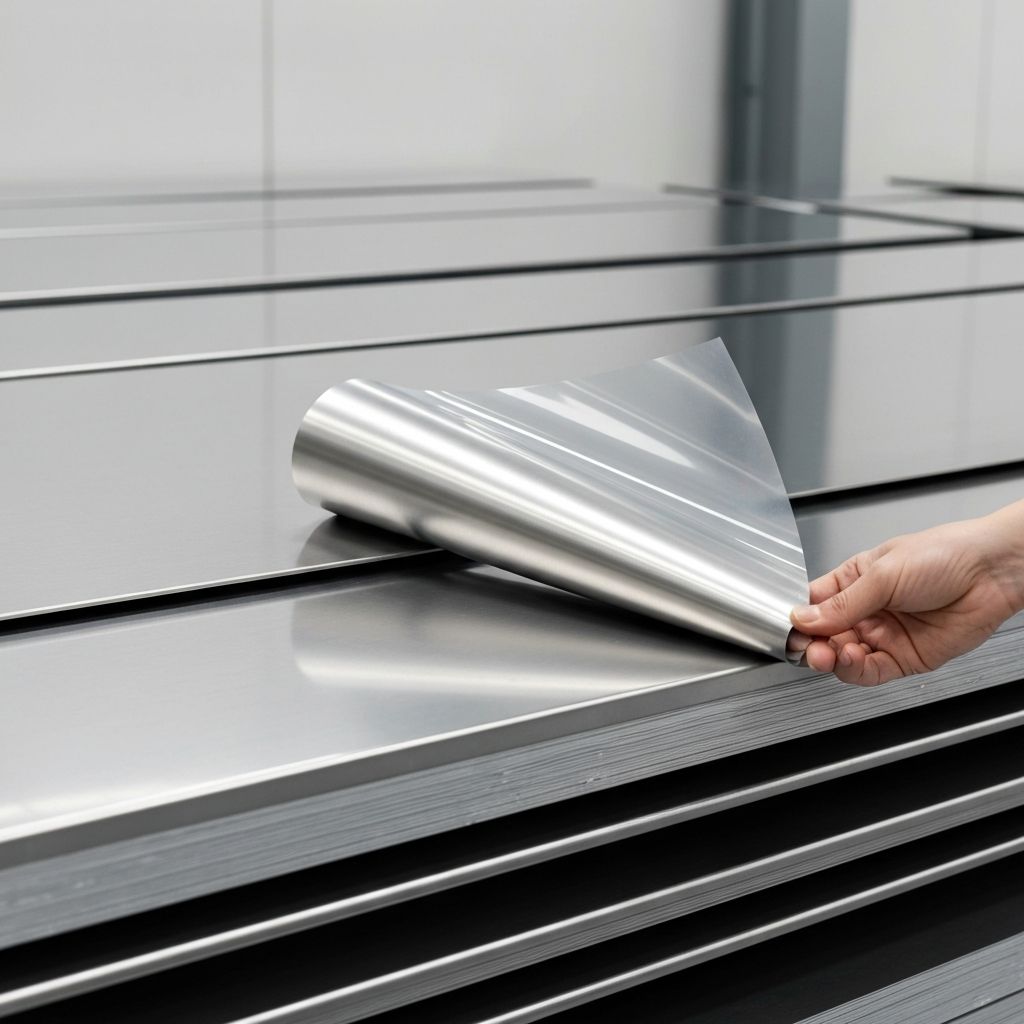
Mirror finish (BA) surfaces have extremely smooth profiles that require ultra-low adhesion films. The smooth surface means the film has maximum contact area, so even low-adhesion formulations grip well. Brushed or hairline finishes (HL) have directional textures that need slightly higher adhesion to prevent lifting during transport.
Film Thickness Selection
Thickness directly impacts scratch protection capability. The rule is simple: the more aggressive the handling environment, the thicker the film should be. But thickness alone isn't everything—the outer layer formulation matters just as much for scratch resistance.
| Application Type | Recommended Thickness | Typical Use Cases |
|---|---|---|
| Light handling, short-term storage | 40-50 microns | Indoor warehouse storage, light fabrication |
| Standard industrial handling | 50-70 microns | Sheet metal processing, moderate transit |
| Heavy-duty applications | 80-100+ microns | Stamping, bending, extended outdoor storage |
| Construction site protection | 100-150 microns | High abuse environment, long exposure periods |
When a protective film manufacturer recommends 60μm for a given application, that number isn't arbitrary—it represents the minimum caliper that has been verified to prevent scratch-through under expected handling conditions for that substrate.
Application Duration Considerations
How long the film needs to remain on the surface is critical for adhesive selection. Time changes everything about adhesive behavior.
- Short-term (under 30 days): Wide range of adhesive chemistries acceptable. Standard PE oil-based adhesives work well.
- Medium-term (1-3 months): Begin considering UV stability. Indoor storage may still allow standard formulations.
- Extended (3-6 months): UV-stabilized formulations essential. Consider acrylic adhesives for outdoor exposure.
- Long-term (6+ months): Premium formulations required. Accelerated aging test data from manufacturer is essential.
Most adhesives build adhesion over the first 24-72 hours after application as the adhesive layer fully wets the substrate. Temperature cycling during storage or transport can accelerate or alter this build. A film that peels cleanly after one week may leave residue after six months at 50°C.
Adhesion Force Control: The Critical Specification
Adhesion control in protective films is not "low, medium, or high." It's a specific peel force value, measured under standard conditions—typically 180° peel at 300 mm/min—and expressed in gf/25mm or N/25mm. A film with 5 gf/25mm peel force and one with 50 gf/25mm peel force are completely different products for completely different jobs.
These are not marketing categories. They are process specifications. A film produced for polished stainless steel shouldn't be sold for textured metal without verification—and yet this mismatch happens routinely in the market.
Testing Before Commitment
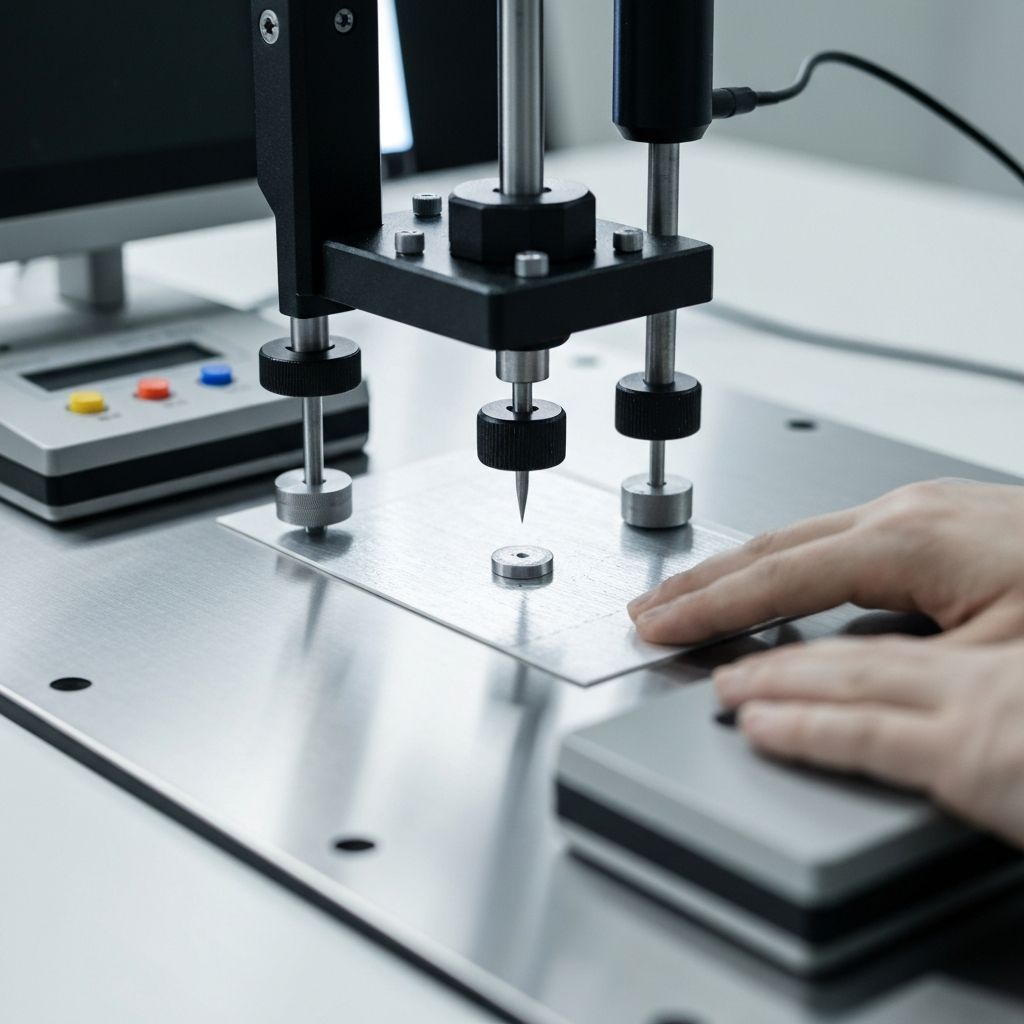
Always request samples and test under your actual conditions. Apply the film to your specific stainless steel grade, expose it to your typical storage conditions for at least 2 weeks, then remove and inspect. Any reputable manufacturer will provide samples for qualification testing.
The testing protocol should include:
- Apply film to actual production substrates, not lab samples
- Expose to realistic storage conditions (temperature, humidity, stacking pressure)
- Age for minimum 2 weeks, preferably matching expected application duration
- Remove at 180° angle at moderate speed
- Inspect surface under strong oblique light for any residue or ghost marks
- For demanding applications, measure contact angle before and after to detect invisible residue
Special Requirements for Different Industries
Different end-use industries have specific requirements beyond basic protection:
- Architectural/facade panels: UV resistance essential; extended outdoor exposure common; appearance of film matters for job site aesthetics
- Appliance manufacturing: Clean removal paramount; automated peel systems require consistent peel force across roll
- Automotive trim: Zero tolerance for residue; often requires anti-static properties; must survive paint bake cycles
- Food processing equipment: FDA compliance may be required; must not leave any contamination on food-contact surfaces
Working with Your Supplier
A quality protective film manufacturer should be able to provide:
- Technical data sheets with specific test methods and conditions
- Accelerated aging test results (typically 70°C for 7 days)
- Batch-to-batch consistency data
- Application recommendations based on your specific substrate and conditions
- Samples for qualification testing at no charge
- Technical support for troubleshooting any issues
If a supplier cannot provide this level of technical support, they are selling a commodity, not a solution. For stainless steel protection where the substrate value far exceeds the film cost, working with a technically capable supplier is not optional.
Key Selection Criteria Summary
- Match adhesion level to surface finish—smoother surfaces need lower adhesion, textured surfaces need higher
- Choose thickness based on handling severity and protection requirements
- Consider application duration when selecting adhesive chemistry—UV stability becomes critical beyond 30 days
- Always test with actual substrates under real conditions before committing to production volumes
- Request accelerated aging test data from suppliers and verify their quality control processes
- Factor in total cost including potential rework, not just film price per square meter