Why Choose PE Co-extruded Film? The Ultimate Residue-Free Material Protection Solution
Introduction: Where PE Co-extrusion Meets Material Protection
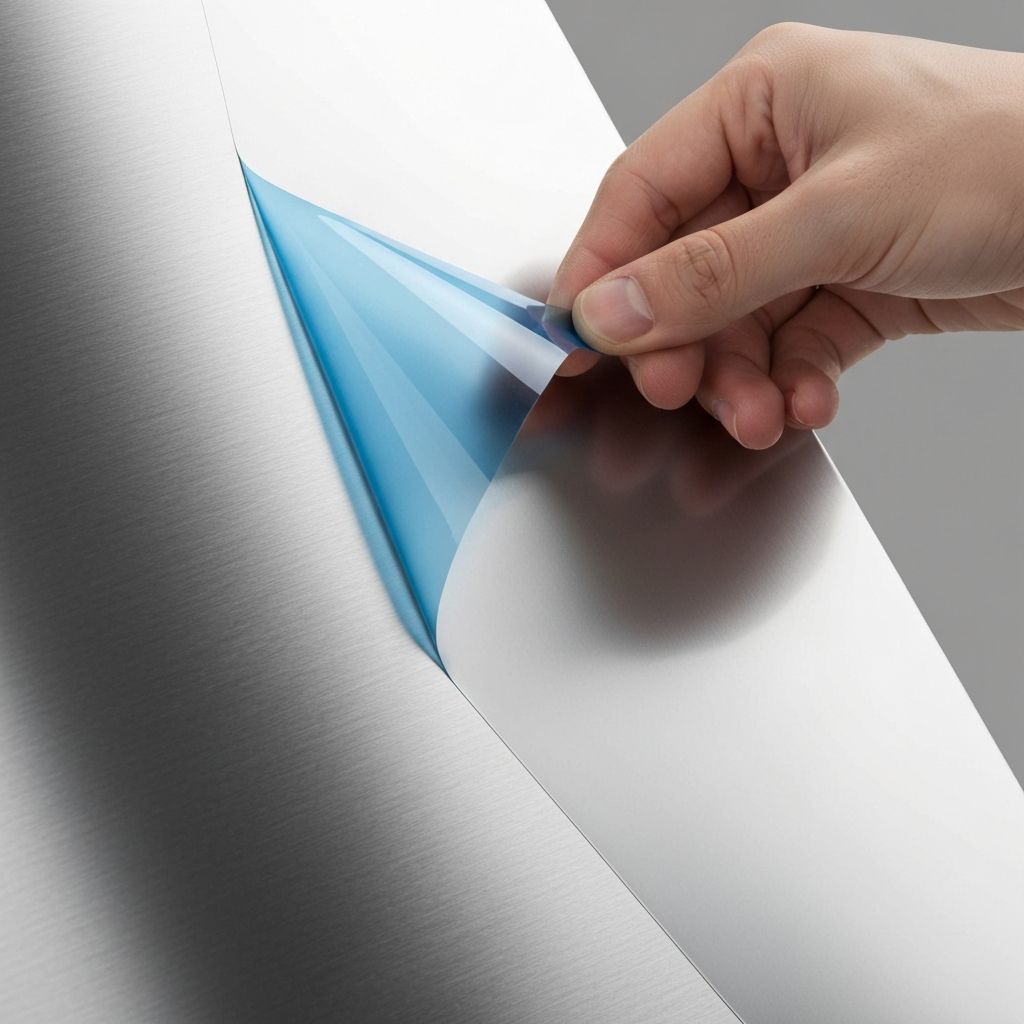
You have probably dealt with the mess at some point—peeling off a protective film only to find sticky, stubborn residue left behind on a pristine surface. That single frustrating moment can ruin the aesthetic of a high-end appliance, a mirror-finished metal panel, or an automotive display screen.
At the core of solving this problem is PE co-extruded film—a packaging technology that is fundamentally changing how industries think about material protection. Unlike older coated or laminated films, co-extruded PE protective film integrates the self-adhesive layer during the extrusion process itself. There is no glue. No waiting for solvent drying. No after-the-fact coating process. The result is a protective film that removes cleanly—every time.
Most people do not realize that residue issues come from the manufacturing method, not from the material itself. Once you understand this, you cannot unsee it. But let's back up and look at why residue exists in the first place.
The Achilles' Heel of Coated Films—Residue and Instability
Traditional protective films are made in two steps. First, manufacturers extrude a base PE film. Then—in a separate, independent step—they coat a liquid adhesive onto the film surface. This liquid glue usually contains solvents, and those solvents need to evaporate off in long industrial ovens. If even a tiny fraction of solvent is trapped under-cured inside the adhesive layer, it will migrate over time, especially under heat. That migration is what causes the residue.
And there is another problem. The glue is a different chemical species from the PE film. It sits on top, not inside. Under prolonged storage, temperature cycling, or UV exposure, the interface between the glue and the film starts breaking down. This is why traditional coated films "age out" and fail unpredictably. We have seen returns from customers where entire shipments of aluminum cladding panels arrived with ghost-like adhesive marks etched into the anodized surface. It is costly, and it damages relationships.
The Difference at a Glance
| Feature | Coated/Laminated Film | Co-extruded Self-Adhesive PE Film |
|---|---|---|
| Adhesive layer application | Secondary coating step; glue sits on substrate | Integrated during extrusion; no glue needed |
| Volatile organic compounds (VOCs) | Present—solvents require oven drying | Zero solvents used |
| Energy consumption | High (additional drying ovens) | Approx. 30% lower energy usage |
| Long-term adhesion stability | Degrades over time; layer separation risk | Stable molecular interpenetration |
| Residue risk | High—especially under heat | Near zero—proven after months of storage |
| Recycling profile | Mixed materials; cross-contamination | Mono-material or polyolefin-family structure |
Co-extruded Self-Adhesive PE Film: A Molecular-Level Bond
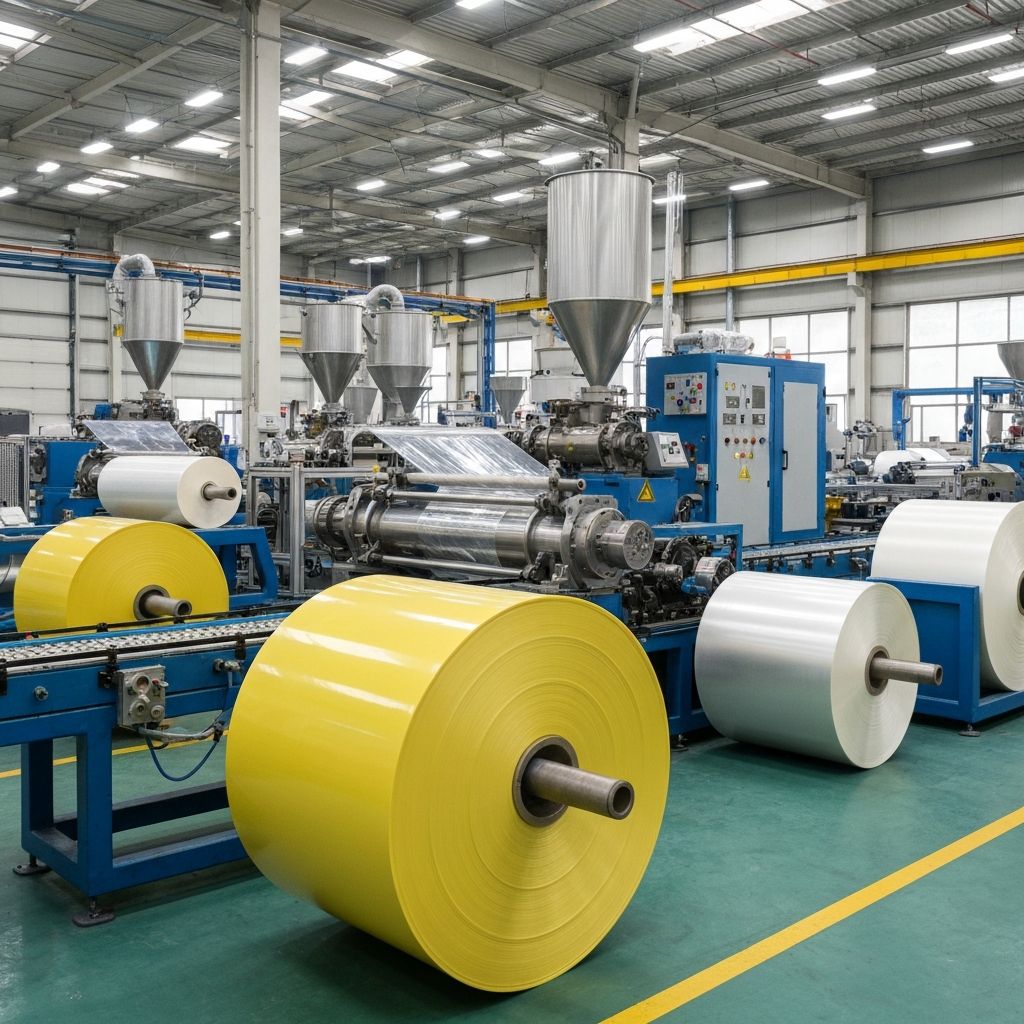
Co-extrusion is fundamentally different. Instead of applying glue to a cold film, we melt and extrude multiple layers of material simultaneously through a single die. The protective base layer and the self-adhesive functional layer flow together in their molten state. At the molecular level, the chains of the different layers interpenetrate and entangle—forming what can be fairly described as a welded interface.
This changes everything about reliability. The adhesion is not supplied by a separate chemical that can separate later. It is an inherent property of the specially formulated inner layer, activated during extrusion. When you remove a co-extruded film, there is no adhesive layer that can "break" and leave debris behind. The tack is part of the polymer itself.
And yes—we can tune that tack precisely. Depending on the application, we adjust the formulation to achieve adhesion levels ranging from ultra-low (suitable for delicate optical films) to strong grip (for textured steel panels). This flexibility is impossible with post-coated films because the glue always sits as a distinct layer with its own set of limitations.
Scratch Resistance: Protecting High-Gloss and Sensitive Surfaces
It sounds obvious, but a protective film's first job is protecting against scratches. Here is where co-extruded PE film truly shines—and not just because of the film itself, but because of the clean removal. A film that leaves residue essentially creates its own damage during removal. Workers end up using solvents, scrapers, or abrasive cloths to clean off the residue—and in doing so, they scratch the very surface the film was supposed to protect.
Co-extruded PE films eliminate this secondary damage path. For applications like piano-black instrument panels, polished stainless steel, or optical-grade acrylic sheets, this is critical. One single scratch on an automotive interior surface can mean scrapping the entire part, which can cost hundreds of dollars per panel.
Our technical team has observed that switching from a coated film to a co-extruded solution reduced surface defect rates by over 40% in a controlled factory trial—purely from eliminating the post-peel cleaning step.
The outer skin layer of a co-extruded film can also be engineered for additional hardness and abrasion resistance. This means scratches from handling, stacking, and transit do not propagate through to the protected surface. The film takes the hit, and the product stays pristine.
Adhesion Stability and Anti-Aging: Why Our Films Outlast the Competition
A protective film is only as good as its behavior over time. Cheap PE film—the kind you find at the lowest price points—skips anti-aging additives altogether. It breaks down under heat and UV exposure. And when it does, it turns yellow, becomes brittle, and the adhesion fails unpredictably. I recall a client in the Gulf who stored untreated PE film in a warehouse where temperatures reached 45°C. Within three months, the film had yellowed so badly it left sticky stains on aluminum profiles. That is not a film problem—it is a formulation problem.
Our co-extruded PE films are built differently. We compound hindered phenol antioxidants at around 2% and UV absorbers at about 1.5% directly into the virgin PE resin. This creates a protective barrier that resists oxidative breakdown, even in harsh storage conditions. Every batch goes through accelerated aging testing—60°C for 72 hours—and our films stay transparent while competitors' films turn amber.
Anti-Aging Performance Data (Accelerated Test: 60°C, 72 Hours)
| Test Item | Co-extruded PE Film (Our Grade) | Standard PE Film Without Additives |
|---|---|---|
| Color Change (ΔE) | ≤1.2 | ≥8.5 |
| Adhesion Stability (peel force before/after) | ±8% | ±35% (failure in some samples) |
| Visual Residue After Removal | None | Yellow marks present |
| Film Integrity | Intact, flexible | Brittle, cracked in spots |
This stability is part of adhesion stability. A film that stays chemically stable keeps its peel behavior predictable. Whether the film has been on the surface for 2 weeks or 8 months, the removal force stays within a tight window. This matters enormously for automated production lines where consistent peel performance is a process parameter, not a nice-to-have.
Recyclable Material and the Circular Economy Advantage
Sustainability is no longer optional. The global PE protective film market was valued at approximately USD 3.8 billion in 2024 and is growing at over 5% annually. A growing portion of that growth is being driven by requirements for recyclable material and eco-friendly packaging solutions. Co-extruded PE film has a natural advantage here.
Because co-extruded films use no glues, they are essentially mono-material products. All layers belong to the polyolefin family, which is important because mixed-material films cause cross-contamination during recycling. When you try to recycle a coated film, the glue residue degrades the quality of the recycled pellets—sometimes to the point where they are unusable. In contrast, co-extruded PE films can enter standard PE recycling streams without contaminating the batch.
For buyers who need to meet increasing ESG demands—whether from regulators, brand owners, or end customers—this is a tangible, verifiable advantage. And we are seeing more export markets requiring recyclability as part of their supplier qualification criteria. This is not just a trend. It is the new baseline.
Sensitive Surface Protection: The Self-Adhesive PE Film Difference
Coated films rely on a layer of glue that is applied on top of the base PE film. That glue layer can interact chemically with polished or painted surfaces, especially over time and under heat. We have seen cases where the plasticizers in the glue migrated into the coated surface of a product, causing micro-crazing that was invisible until the product was examined under bright light—and by then, it was too late.
Co-extruded self-adhesive PE films remove this failure mode entirely. Because there is no glue, there is nothing to migrate. The inner layer is a specially engineered polyolefin copolymer that adheres through surface contact forces—not chemical aggression. This makes co-extruded PE film the ideal self-adhesive PE film for sensitive surfaces like:
- Acrylic and polycarbonate panels
- Powder-coated aluminum
- Polished stainless steel
- Glass and touchscreen displays
- Automotive painted parts
For high-end applications—think luxury building facades or premium electronics—the choice between coated and co-extruded film is not a minor detail. It can be the difference between a flawless finish and an expensive rework.
A Note for Exporters: Global Quality, One Standard
Having worked with distributors and exporters across Southeast Asia, the Middle East, Europe, and Latin America, I can tell you this: the performance consistency that matters in your home market matters even more when products cross borders. A film that works perfectly in a temperature-controlled factory in Germany might behave very differently after six weeks inside a shipping container crossing the equatorial Pacific.
We have built our quality control around this reality. Every batch is tested for adhesion consistency, aging resistance, and residue-free removal under multiple temperature and humidity profiles. This is not a luxury—it is what responsible exporting requires. Our factory operates under ISO 9001 certification, and we provide full traceability documentation for every shipment.
The cost of a failed film in a distant market is enormous: freight charges, customs fees, installation labor, and brand damage. A co-extruded PE film that stays predictable regardless of transit conditions is effectively an insurance policy for your international business.
Conclusion: Make the Switch to Zero-Residue Confidence
PE co-extruded film is not just a product upgrade—it represents a fundamentally different approach to protective packaging. By building the adhesion into the film at the molecular level, rather than applying it as a separate chemical layer, we solve the residue problem at its root cause. The technical advantages flow from this single, elegant principle: clean removal, scratch resistance, adhesion stability, anti-aging performance, and genuine recyclability.
The global market is moving in this direction, and the exporters who position themselves with co-extruded solutions now are building supply chains for the next decade, not the last one. Whether you are protecting delicate optical surfaces, heavy-gauge metal panels, or high-end consumer goods, the choice is worth making right.