When the Peel Goes Wrong, It's Already Too Late: The Engineering Quietly Working Inside a PE Protective Film
Introduction: The Moment of Removal
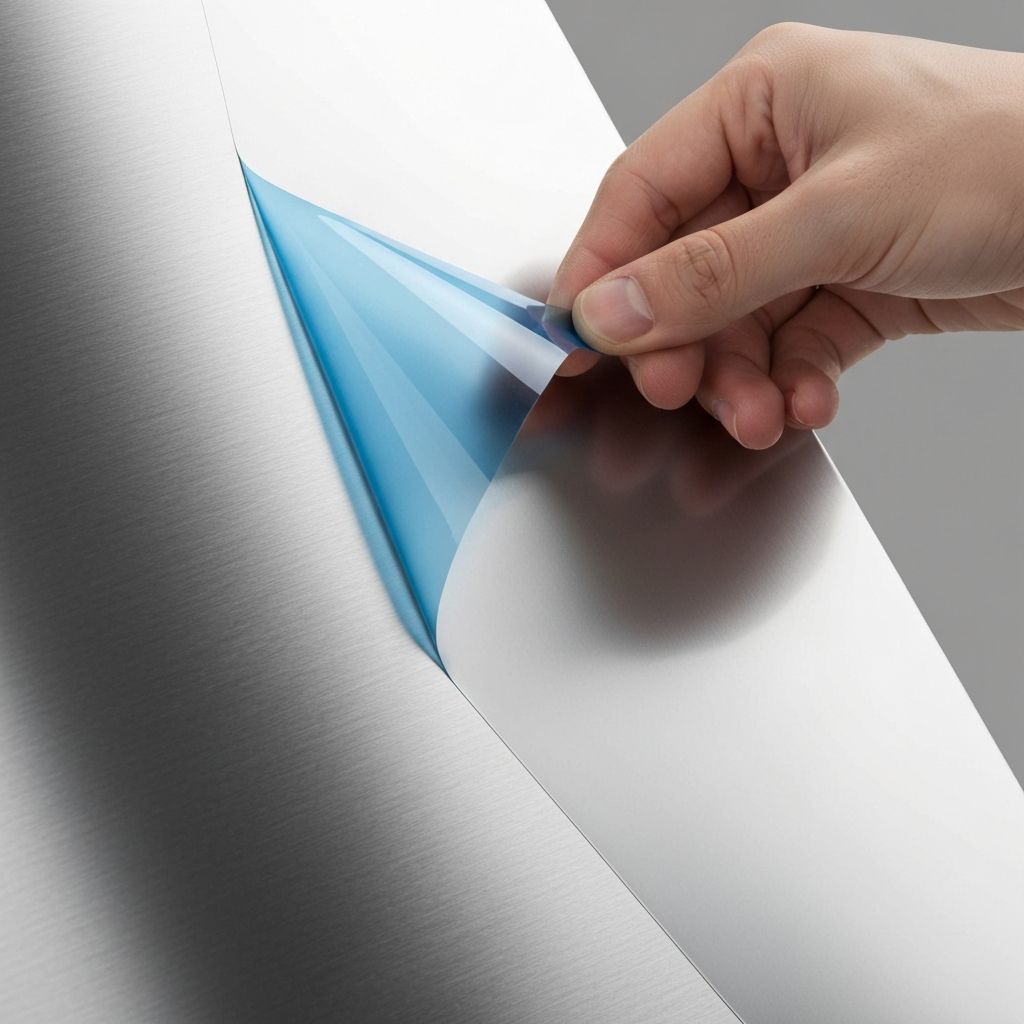
A protective film lives its entire service life for one single moment: the peel.
It sits on a surface for weeks or months—through manufacturing, warehouse stacking, shipping, and installation. Nobody thinks about it. Then someone grabs a corner and pulls. If the film releases cleanly with the right resistance and leaves zero trace behind, the job is done. Nobody calls to thank the engineer. That's the point.
But if it stretches, tears into fragments, or—worse—leaves a ghostly adhesive shadow on what was supposed to be a pristine surface? The phone rings. And the conversation is never cheap.
A stainless steel panel with adhesive residue isn't just a cleaning problem. It's a rework problem. An automotive trim piece with "ghost marks" visible under sunlight isn't sellable. A display screen with uneven peel force during automated assembly jams a production line. These failures cost orders of magnitude more than any premium paid for the right film in the first place.
This article is about the material science and process engineering that separates films that peel clean from films that don't. It's written for the people who specify, buy, or manufacture PE protective film—OEM procurement teams, quality engineers, convertors, and the PE protective film production manufacturers who turn polymer pellets into surface protection.
Co-Extrusion: The Architecture Before the Adhesive
Most people think of protective film as "PE with glue on one side." That mental model is about twenty years out of date, and it's the root cause of most adhesion failures.
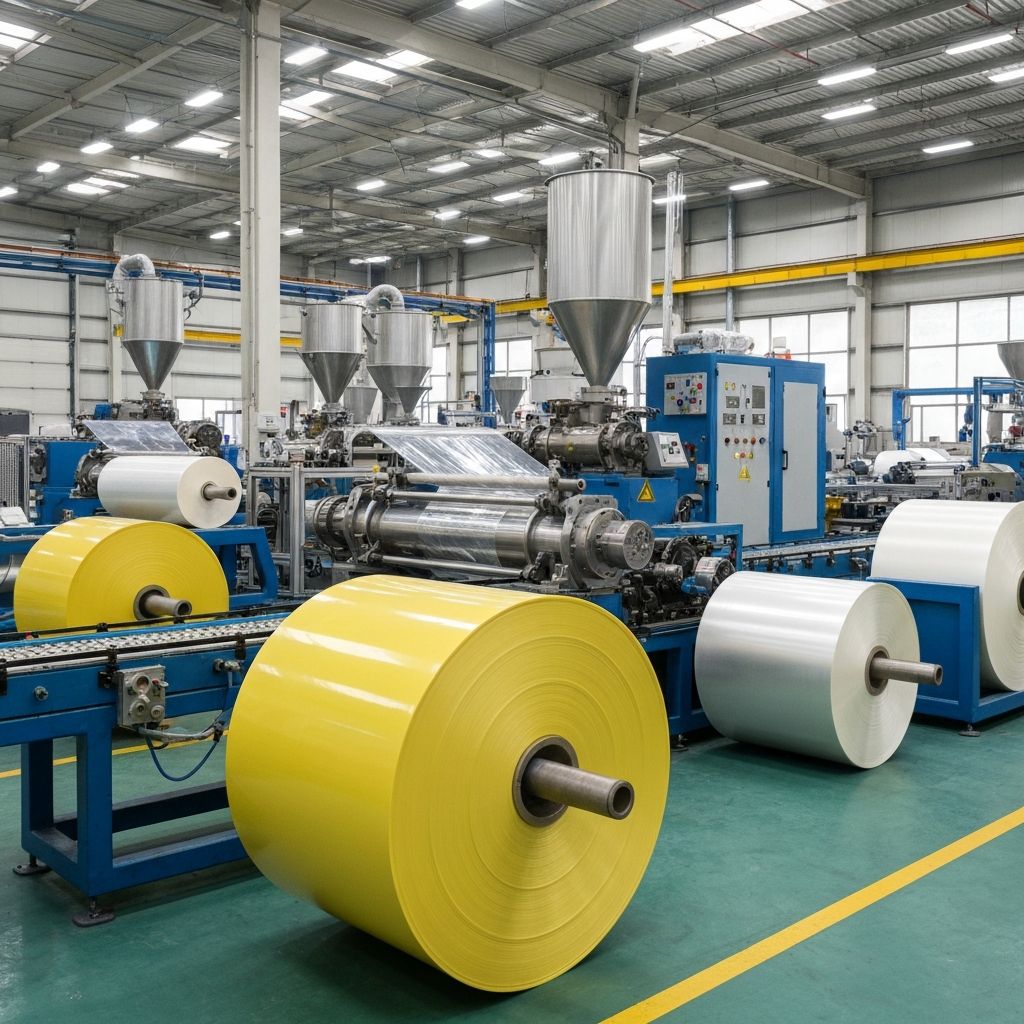
Modern PE protective film manufacturing uses co-extrusion technology—a process where multiple polymer layers are formed simultaneously through a single die. Instead of taking a base film and coating adhesive onto it in a separate step, co-extrusion builds the entire structure in one pass: the PE core layer, an adhesive layer, and often intermediate tie layers that bind everything together.
The Three-Layer Architecture
This is the workhorse configuration for PE protective film co-extrusion:
- Layer 1 – Skin/Release Layer: The outside face. This is often a polyethylene-based formulation that provides the mechanical "handle" for the film and may incorporate anti-block or slip additives. It does not touch the protected surface.
- Layer 2 – Core/Body Layer: The structural backbone. Typically PE with controlled density and crystallinity, engineered for the specific balance of stiffness, elongation, tear resistance, and conformability the application demands. This layer determines whether the film drapes smoothly over a curved bumper or fights the operator on every square inch.
- Layer 3 – Adhesive Layer: The functional face. This layer contacts the substrate and provides the controlled tack. In PE oil-based adhesive film systems, this layer is a formulated compound based on a polyolefin elastomer or a styrenic block copolymer, plasticized with oil to achieve the target adhesion level.
The key insight: in a co-extruded structure, the adhesive layer is not a separate coating applied to a finished film. It is an integrated, co-formed layer whose thickness, composition, and surface properties are engineered during the extrusion process itself. The entire film—three, five, or more layers—exits the die as a single entity and is cast onto a chill roll to solidify.
Why Co-Extrusion Matters for Performance
The co-extrusion approach delivers several things that post-coating cannot:
- Layer uniformity: The adhesive layer's thickness is established by extruder output and die geometry, not by a coating roller. Variation of ±1–2 μm is achievable, versus ±5–10 μm in many post-coating operations. That matters because peel force is directly proportional to the volume of adhesive at the interface.
- Clean surface transfer: In post-coating, the adhesive formulation is deposited as a liquid onto a solid film. The bond between coating and film relies on surface preparation. If that bond isn't perfect, the entire adhesive layer can transfer to the substrate on removal. In co-extrusion, the layers are fused in the melt state. Failure at the interlayer interface is rare.
- No solvent residuals: Solvent-based coating leaves trace solvents in the adhesive layer that can migrate to the protected surface over time, causing "ghost marks." Co-extruded adhesive layers are solvent-free by definition.
PE Oil-Based Adhesive Systems: What's Inside the Tacky Layer
The term "PE oil-based adhesive film" is widely used in industrial procurement, but what does it actually mean at a formulation level?
A PE oil-based adhesive layer is essentially a compounded thermoplastic elastomer system. The starting point is a base polymer that provides cohesive strength—typically a styrene-ethylene-butylene-styrene (SEBS) block copolymer, or sometimes an ethylene-propylene copolymer. In its pure form, this base polymer has high internal strength but very little surface tack.
That's where the oil comes in.
How Oil Modifies Adhesive Properties
A processing oil—typically a white mineral oil or a naphthenic oil, selected for low volatility and oxidative stability—is compounded into the polymer at loadings that can range from 5% to 40% by weight. The oil serves multiple functions:
- Plasticization: The oil molecules insert themselves between polymer chains, increasing chain mobility and softening the material. This allows the adhesive layer to wet the substrate surface—a prerequisite for adhesion.
- Tack development: A softened surface establishes intimate contact with the substrate under light application pressure. The lower the elastic modulus of the adhesive layer, the faster and more completely it conforms to surface micro-roughness.
- Peel force tuning: The oil loading is the primary lever for adjusting adhesion level. Higher oil content produces lower peel force—more oil means more chain separation, lower cohesive strength, and easier separation. Lower oil content produces higher peel force.
The Crosslinking Dimension
Pure thermoplastic adhesive layers have a limitation: at elevated temperatures—say, a painted metal panel sitting in direct sunlight—they can soften to the point where cohesive failure occurs during removal. The adhesive layer splits internally rather than separating cleanly from the substrate. This is one major source of residue complaints.
The solution is controlled crosslinking—introducing chemical bonds between polymer chains so the adhesive layer maintains its integrity even when softened. Crosslinking agents such as isocyanates or carbodiimides are incorporated at low levels (typically 0.1–5 parts per hundred resin) to build a three-dimensional network within the adhesive without eliminating the surface tack that makes it useful.
Adhesion Force Control: The Precision Between 'Falling Off' and 'Won't Come Off'
Adhesion control in protective films is not "low, medium, or high." It's a specific peel force value, measured under standard conditions—typically 180° peel at 300 mm/min—and expressed in gf/25mm or N/25mm. A film with 5 gf/25mm peel force and one with 50 gf/25mm peel force are completely different products for completely different jobs.
Typical Peel Force Ranges by Application
| Application | Typical Peel Force | Substrate | Failure Mode Concern |
|---|---|---|---|
| Polished stainless steel sheet | 3–10 gf/25mm | Smooth, high surface energy | Residue, ghosting |
| Painted automotive body panel | 10–30 gf/25mm | Medium surface energy | UV degradation of adhesive |
| Textured architectural metal | 30–80 gf/25mm | Rough, variable surface energy | Insufficient adhesion during handling |
| Glass/display screen | 2–8 gf/25mm | Ultra-smooth, sensitive | Any residue is unacceptable |
| PMMA/polycarbonate sheet | 5–20 gf/25mm | Plastic, solvent-sensitive | Chemical attack from adhesive components |
These are not marketing categories. They are process specifications. A film produced for stainless steel shouldn't be sold for textured metal without verification—and yet this mismatch happens routinely in the market.
The Levers That Control Adhesion
Adhesion force is a result, not a setting. It emerges from the interaction of multiple factors:
- Adhesive layer formulation composition: This is the primary control knob. Oil loading, polymer type, molecular weight, crosslinker chemistry—each variable shifts the adhesion profile. A formulation change can swing peel force by 10–80 gf/25mm.
- Adhesive layer thickness: For a given formulation, thicker adhesive layers produce higher peel force. A 15 μm layer might produce 8 gf/25mm while a 25 μm layer of the same formulation produces 20 gf/25mm on the same substrate.
- Substrate surface energy: The same film adheres differently to different surfaces. A film that peels cleanly at 5 gf/25mm from polished steel may barely adhere at all to a low-surface-energy polypropylene sheet.
- Post-application behavior: Adhesion is not static. Most PSAs build adhesion over the first 24–72 hours after application as the adhesive layer fully wets the substrate. Temperature cycling during storage or transport can accelerate or alter this build.
Residue-Free Removal: Not a Promise, a Design Outcome
Residue on the protected surface after film removal is the industry's original sin. It has been a problem for as long as protective films have been in use, and it remains a persistent technical challenge—particularly for high-value applications like optical films and polished metals. The reason it persists is that residue is not a single failure mode. It is at least four different things, each with its own mechanism:
- Cohesive failure: The adhesive layer splits internally. Part stays on the film, part stays on the substrate. Root cause: inadequate cohesive strength of the adhesive formulation for the removal conditions.
- Adhesive transfer: The entire adhesive layer, intact, separates from the film backing and remains on the substrate. Root cause: the adhesive-backing interface bond is weaker than the adhesive-substrate bond.
- Low molecular weight species migration: Small molecules—oligomers, residual plasticizers, uncured crosslinker fragments—migrate out of the adhesive layer and deposit onto the substrate surface over time. This is the source of "ghost marks."
- Substrate damage: The film removes a layer of the substrate itself—paint delamination, coating lift-off, or surface roughening. Root cause: the adhesive bond to the substrate exceeds the cohesive strength of the substrate or its coating.
The Design Principles for Residue-Free Performance
Addressing all four modes simultaneously is what turns residue-free protective film design into a multi-variable systems problem. The approach spans four dimensions: material selection, process design, operational norms, and environmental control.
- Cohesive integrity via crosslinking: The adhesive layer must have sufficient internal strength to remain intact during removal at the specified peel speed and temperature range.
- Interface integrity via co-extrusion bonding: The adhesive layer must be better bonded to its own film backing than to the substrate. Co-extrusion delivers this naturally: the layers are fused in the melt state.
- Low-migration formulations: The adhesive formulation must minimize mobile species. This means using high-purity base polymers, low-volatility processing oils, and crosslinking agents that react completely during curing.
- Peel force matched to substrate strength: The adhesion level must be set below the damage threshold of the least-cohesive layer in the system.
Controlled Removal Conditions
Even a perfectly formulated film can leave residue if removed incorrectly. The recommended approach is a 180° slow peeling method at a speed of ≤300 mm/min to avoid cohesive failure within the adhesive layer. Environmental conditions matter too: temperature should be controlled at 20–25°C with humidity at 40–60% RH, as low temperatures or high humidity can increase adhesiveness. For field applications where conditions can't be controlled, the film must be engineered with enough formulation headroom to accommodate realistic removal scenarios.
Verification That Goes Beyond "Looks Clean"
Visual inspection under strong light with a 10× magnifier or microscope is the minimum. For demanding applications, contact angle measurement before and after film application can detect surface energy changes—a sign of invisible residue—and FTIR or GC-MS can identify organic residuals at the parts-per-million level.
A responsible PE protective film production manufacturer validates residue-free performance not just at 24 hours, but after accelerated aging: 70°C for 7 days is a common protocol for simulating extended field exposure. A film that peels clean at 24 hours but leaves residue after the aging test hasn't really solved the problem.
Protective Film Adhesive Chemistry: Comparison
Different adhesive chemistries do fundamentally different jobs. The table below compares the four major families used in protective film applications:
| Property | Rubber-Based | Acrylic-Based | Silicone-Based | PE Oil-Based |
|---|---|---|---|---|
| Adhesion level range | Medium–High | Low–High (broadest range) | Low–Medium | Low–Medium |
| Temperature resistance | -20 to 70°C | -10 to 150°C | -70 to 250°C | -10 to 80°C |
| UV resistance | Poor (yellows) | Excellent | Excellent | Moderate |
| Residue risk | High (formulation-dependent) | Low (with proper crosslinking) | Very low | Low–Medium |
| Cost | Low | Medium | High | Low–Medium |
| Best for | General-purpose short-term | Long-term outdoor, electronics | Extreme temperatures, sensitive substrates | Cost-sensitive, co-extruded films |
Rubber-based adhesives: Natural rubber with tackifier resins. Cheap, aggressive initial tack, widely used in general-purpose protective tapes. The downside: poor UV stability (they yellow and lose adhesion), temperature-limited, and prone to residue if not thoroughly crosslinked. Still common in construction and metal processing applications where the film is applied and removed within weeks.
Acrylic adhesives: The broadest performance window. By selecting monomers and controlling copolymer architecture, acrylic systems can achieve everything from ultra-low-tack removable adhesives to permanent structural bonds. Excellent clarity, UV resistance, and high-temperature performance make these the default choice for electronics, automotive paint protection, and outdoor applications.
Silicone adhesives: The premium option. Unmatched temperature range (-70 to 250°C), extremely low surface energy (they adhere where nothing else will), and inherently clean removal due to their low adhesion to almost everything. Used in applications where the substrate is so sensitive or so expensive that any residue is unacceptable—aerospace composites, optical elements, medical device surfaces.
PE oil-based adhesives: The workhorse for co-extruded protective films. The adhesive layer is formulated by compounding a polyolefin-based elastomer (often SEBS or EVA) with processing oil and, in more advanced grades, a crosslinking system. These formulations deliver adequate adhesion for metal sheet, plastic panel, and glass applications at a cost point that makes them commercially viable for high-volume consumable films.
Market Context: Where the Numbers Point
The protective films market overall was estimated at $23.37 billion in 2025, growing at 6.3% CAGR to reach $35.85 billion by 2032. The PE segment commands a significant share, with its market valued at $3.8 billion in 2024 and projected to reach $5.5 billion by 2032 at 5.2% CAGR.
What's driving this:
- Electronics manufacturing expansion: The global electronics sector is projected to exceed $3.3 trillion by 2025, with Asia-Pacific responsible for over 60% of manufacturing output.
- Automotive surface protection tightening: Electric vehicles introducing sensitive touchscreen interfaces and premium interior finishes are accelerating adoption of high-performance protection films.
- The sustainability pivot: Environmental regulations and corporate sustainability goals are reshaping material selection. Sustainable protection films now command 18% price premiums.
- Co-extrusion technology as a differentiator: Multi-layer co-extruded films that allow combining a soft adhesive layer with a tough, durable outer layer are broadening the application scope.
For PE protective film production manufacturers, the market trajectory is clear: growth continues, but the value is migrating toward technically differentiated products—films with precise, stable adhesion control, verified residue-free performance across temperature ranges, and documented batch-level quality data that OEMs can audit.
Final Takeaways
- Co-extrusion is not a manufacturing detail—it's the architecture of performance. A three-layer co-extruded PE protective film delivers inherently better interlayer bonding, tighter thickness control, and zero solvent residuals compared to post-coated alternatives.
- PE oil-based adhesive is an engineered material, not "glue." The oil loading, base polymer selection, and crosslinker chemistry in the adhesive layer determine everything: initial tack, peel force stability over time, temperature resistance, and—most critically—whether the film leaves residue.
- Adhesion control is a measurement discipline, not a label. "Low tack," "medium tack," and "high tack" are marketing terms. The engineering reality is a peel force value in gf/25mm, measured at 180° and 300 mm/min, verified after accelerated aging at 70°C for 7 days.
- Residue-free removal has four failure modes, and three of them are invisible to the naked eye until it's too late. True residue-free performance requires verification beyond visual inspection.
- The cheapest film is never the cheapest. The cost of removing adhesive residue from a production batch of 10,000 stainless steel panels dwarfs any upfront savings from buying a lower-grade film.