
November 4, 2026
PE Protective Film Adhesion Levels: How to Choose Peel Strength for Metal, Glass and Plastic Surfaces
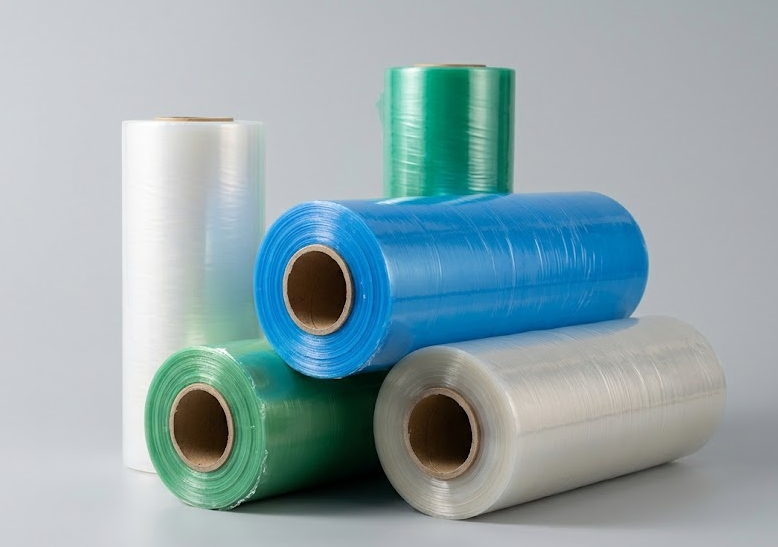
Table of Contents
What PE Protective Film Does in Real Production
Why Adhesion Level Is the First Decision
Low, Medium and High Tack Compared
How Peel Adhesion Is Measured
Matching Film to Substrate: Metal, Glass and Plastics
Thickness, Colour and Additive Options
Removal Window and Residue Risk
Typical Specification Ranges Compared
A Short Selection Checklist
About This Guide
FAQ
What PE Protective Film Does in Real Production
PE protective film is a thin polyethylene layer with a pressure sensitive adhesive. It goes on a clean surface at the factory or at the service centre, and it comes off again later. The job sounds small. The cost of getting it wrong is not. One scratched stainless panel or one hazy acrylic sheet is enough to lose a whole order.
Most buyers meet this product only when something goes wrong. A film that lifts at the corner during transit lets dust under the edge. A film that sticks too hard tears on removal or leaves adhesive behind. So the real question is not "which film is cheapest" but "which adhesion level fits this surface and this process".
Polyethylene is used because it is soft, cheap, easy to extrude and simple to laminate. It also stretches. That stretch matters when the sheet is bent, rolled or punched after the film is applied.
Why Adhesion Level Is the First Decision
Adhesion level, often called tack level, decides how strongly the PE protective film holds to the surface. It is set by the adhesive system, the coating weight and the film structure. Everything else - thickness, colour, width, printing - comes after.
Buyers usually describe what they need in plain words: "it must not fall off in the truck" or "it must peel off in one piece after three months". Those two sentences already point to different tack levels. A good PE protective film manufacturer will turn that description into a peel strength number and then make a sample for testing.
Low, Medium and High Tack Compared
Low tack
Low tack film holds lightly. It is used on smooth, delicate or coated surfaces where any adhesive transfer would be a problem. Think polished acrylic, painted panels, high gloss laminates and some glass. Removal is easy and clean.
The limit is that low tack film does not like heat, rough handling or long storage. On a deep drawn part it may lift at the corners.
Medium tack
Medium tack is the common workhorse. It suits most aluminium sheets, coated steel and general plastic sheets. It survives cutting, stacking and normal transport, and it still peels by hand without tools.
High tack
High tack is for rough or structured surfaces. Embossed metal, textured plastics and some powder coated parts need more grab, because the adhesive only touches the high points of the surface. High tack film also handles forming better.
The trade-off is clear. More grab means more risk of residue, especially on soft coatings and in hot weather. High tack film should always be tested on the real part first.
How Peel Adhesion Is Measured
Peel adhesion is not a feeling. It is measured. The common method for pressure sensitive tapes and films is ASTM D3330, published by ASTM International. In that test a strip is applied to a standard panel, then peeled back at a fixed angle and speed, and the force is recorded. The result is reported as force per unit width.
This is why two suppliers can quote different numbers for the "same" tack level. Test conditions differ. Panel material, dwell time, peel angle and speed all change the result. When you compare offers, ask which method and which panel were used.
A second useful check is a simple ageing test: apply the film to the real part, store it at room temperature, then store another piece warm, and peel both after 7, 30 and 90 days. That small trial catches most problems before a shipment does.
Matching Film to Substrate: Metal, Glass and Plastics
Metal surfaces
Aluminium is soft. It scratches easily and it can react with aggressive adhesives, so a stable, medium tack metal surface protection film is normally used. Stainless steel depends on the finish: a mill finish tolerates stronger adhesion, while a mirror or hairline finish needs a gentler film to avoid haze.
Glass
Glass is smooth and non porous, so adhesion looks easy. The real risks are weathering and removal. Film left on glass outdoors can bake on under UV and become hard to strip. For glass, use a clean, UV stable adhesive and a clearly stated removal window.
Plastics
Plastics vary a lot. Acrylic, PC and PET sheets can be sensitive to adhesive chemistry and can show ghosting after removal. Self adhesive protective film for plastics should always be sampled on the exact grade, not on a similar one. Plasticiser migration in soft PVC is another reason to test before ordering.
Thickness, Colour and Additive Options
Film thickness is usually given in microns. Thin film is cheaper and conforms well; thicker film gives better puncture and abrasion resistance. Most industrial uses sit in a low tens to low hundreds micron band, and the right value depends on how rough the handling is.
Colour is not only decoration. Black and white film blocks light and is often used outdoors. Blue film is easy to see on the shop floor, which helps workers notice that it is still there. Printed film carries a part number, a brand or a handling instruction, and it also discourages substitution.
Additives cover UV stabilisation, anti static behaviour and slip control. An anti static grade helps on electronics parts and on film that is unwound fast on a line.
Removal Window and Residue Risk
Every PS adhesive has a time limit. Heat, sunlight and pressure shorten it. A film rated for indoor storage may fail on a container deck in summer.
Residue comes from three places: adhesive that is too strong for the surface, adhesive that has oxidised with age, and a surface that was not clean at application. Oil, dust and release agents all weaken the bond in a patchy way. That patchy bond then breaks unevenly and leaves pieces behind.
Removal should be done at a steady angle, not in a fast jerk. Warm film peels more easily than cold film, so a cold warehouse is a bad place to strip panels.
Typical Specification Ranges Compared
Option | Typical use | Tack level | Common thickness band | Removal behaviour |
Light duty PE film | Polished plastics, painted panels | Low | Thin, approx. 30-50 micron | Hand peel, low residue risk |
General purpose PE film | Aluminium sheet, coated steel | Medium | Approx. 40-70 micron | Hand peel after normal storage |
Heavy duty PE film | Embossed or textured metal, forming | High | Approx. 60-100 micron | Slower peel, test before use |
Outdoor / UV stable film | Glass, facade panels, long storage | Medium to high | Approx. 50-100 micron | Defined removal window, weather dependent |
Anti static / functional film | Electronics parts, display surfaces | Low to medium | Approx. 40-70 micron | Clean peel, low charge build up |
The bands above are general industry practice, not a product list. Peel adhesion test method reference: ASTM International, ASTM D3330 peel adhesion of pressure sensitive tape - https://www.astm.org/. Quality management reference: ISO 9001 - https://www.iso.org/iso-9001-quality-management.html.
A Short Selection Checklist
l Write down the surface: material, finish, coating, roughness.
l Write down the process: cutting, bending, punching, laser, forming.
l Write down the journey: stacking, transport, outdoor storage, expected months on the part.
l Ask the supplier for the peel strength value and the test method behind it.
l Ask for samples in two tack levels, not one.
l Test on the real part, including a warm ageing test.
l Confirm the removal window in writing.
This list takes an hour. It usually saves a container.
About This Guide
This guide is general technical information for buyers of PE protective film and self adhesive protective film. Adhesion level, thickness, peel strength, colour, width and removal window are all made to the actual enquiry. Values depend on the substrate, the process and the storage conditions, and they should be confirmed with the manufacturer before ordering. No performance promise is made here; samples and testing on the real part are always the final reference.
FAQ
What peel strength do I need for aluminium sheet?
Most aluminium sheet uses a medium tack film, but the finish and the storage time decide it. Ask for two samples and test them on your own material.
Can one PE protective film be used on metal and glass?
Sometimes, but it is risky. Metal needs more grab and glass needs better UV stability and a clean removal window.
Why does protective film leave residue?
Usually because the adhesion is too high for the surface, the film stayed on too long, or the surface was oily when the film went on.
How long can PE protective film stay on a part?
It depends on the adhesive, the temperature and the sun exposure. Always confirm the removal window with the manufacturer for your storage conditions.
Is thickness or tack more important?
Tack first. Thickness only changes how well the film resists puncture and abrasion once the adhesion level is right.
What should I ask a PE protective film manufacturer for?
Ask for the peel strength value, the test method, the removal window and two sample tack levels. That is enough to start a proper comparison.